The Art of Japanese Butchery
How Wagyu is Cut, Not Killed
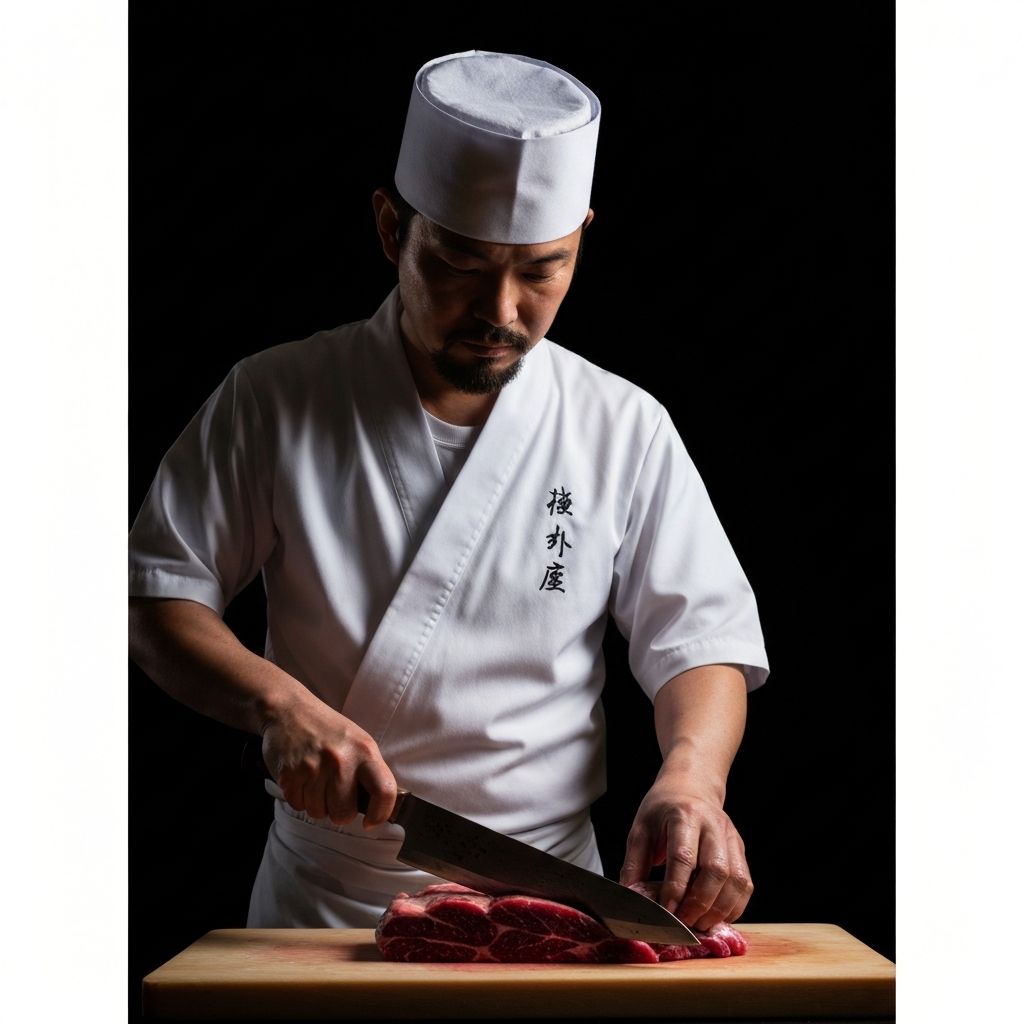
In Japan, meat is not butchered. It is crafted. The knife is not a tool — it is a brush, and the butcher, a quiet artist painting in precision.
To understand Wagyu, you must first understand the art that releases it — the Japanese way of butchery.
A Philosophy, Not a Process
Japanese butchery is rooted in Shokunin (職人) — the spirit of craftsmanship. It is a code of honor that says: if you must take life, give it respect through perfection.
Every slice, every motion, carries centuries of discipline from the Edo and Meiji eras, when meat consumption was still rare. The Japanese butcher (Niku-shokunin) treats each cut not as waste, but as a gift — every gram must reveal balance, harmony, and purity.
Reference: Japanese Culinary Academy – Niku-shokunin Traditions
How Japanese Butchery Differs from the West
Western butchery divides the carcass for speed and utility. Japanese butchery divides it for texture and flavor flow.
In Wagyu, fat and muscle interlace like silk — and if cut wrongly, the structure collapses. That's why Japanese artisans follow the muscle grain, not the bone map. The goal: to preserve marbling direction, so the melt happens evenly when cooked.
Reference: Japan Meat Grading Association – Butchery Guide
The 3 Rules of Japanese Butchery
Respect the Grain (筋を読む – suji o yomu): Every muscle has a story. Japanese butchers 'read' the muscle's direction to decide where to separate it.
Cut with Silence (静かに切る – shizuka ni kiru): The knife must glide, not press. Pressure bruises fat; gliding keeps its integrity intact.
Reveal Beauty (美を見せる – bi o miseru): Each cut should expose the marbling like a landscape — balanced, centered, and symmetrical.
Why the Cut Changes the Taste
Wagyu's tenderness depends on how fat and fiber align. A wrong angle of cut can change mouthfeel completely — turning silk into sponge.
By following the marbling's natural geometry, Japanese butchers maintain the meat's capillary integrity, ensuring it melts evenly at 25°C. This is what gives Wagyu its signature 'buttery dissolve' instead of chew.
Reference: National Agriculture and Food Research Organization (NARO)
The Wagyu.ae Standard
At Wagyu Arabiya Trading LLC, our imports reflect Japan's devotion — every cut from Miyazaki, Omi, and Kobe arrives pre-trimmed by licensed Niku-shokunin.
We maintain that standard across the GCC through precision cold-chain handling and strict visual inspection. Because in our world, the cut isn't the end of life — it's the beginning of legacy.
Meat becomes art. Food becomes faith. And every cut becomes a quiet conversation between cultures — one that tastes like respect.