
Japanese Wagyu Exports Explained
Shelf Life, Cold Chain, and the Hybrid Frozen–Chilled Model
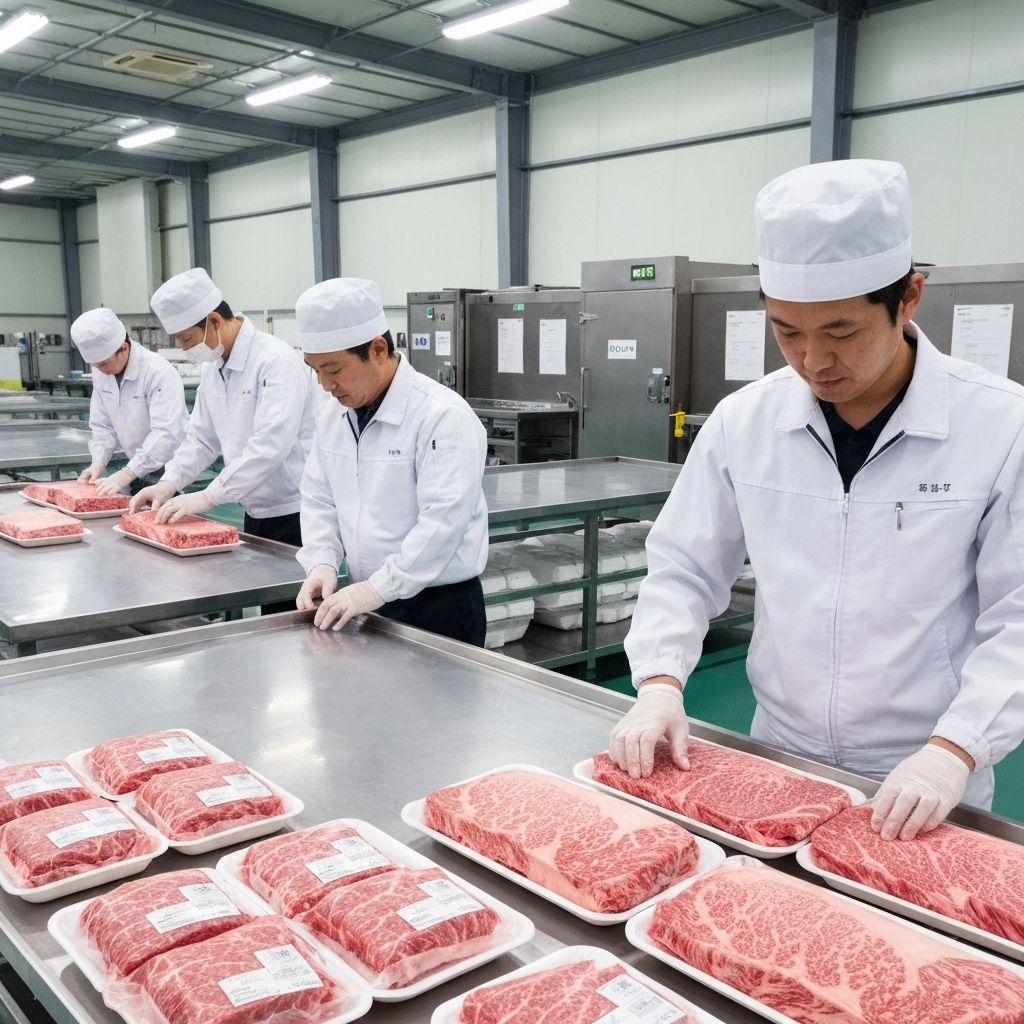
Authentic Japanese Wagyu is one of the most regulated and technically sensitive meats in the world. Understanding how it is handled, stored, and distributed is essential to preserving its quality outside Japan.
Why Japanese Wagyu Is Different
Premium Japanese Wagyu such as Ōmi Wagyu, Kobe Wagyu, and Miyazaki Wagyu is characterized by extremely high marbling, high oleic acid content, and a low fat melting point (approximately 25–30°C).
This fat composition creates the signature Wagyu texture and flavor — but also makes the product highly sensitive to temperature fluctuation.
Japanese export authorities emphasize that Wagyu quality is preserved only through strict temperature control and traceability.
Reference: Japan Livestock Export Promotion Council (JLEC) & Japan Ministry of Agriculture (MAFF)
Shelf Life Reality: Chilled vs Frozen Wagyu
Chilled (Fresh) Wagyu requires storage at 0–2°C with a maximum recommended retail shelf life of 3–5 days. Export risk is high when timelines extend beyond 10–12 days post-slaughter.
Because Wagyu fat softens quickly, even small temperature deviations accelerate oxidation, aroma loss, and visual deterioration of marbling. Japanese livestock authorities require immediate chilling and vacuum sealing to slow these effects.
Frozen Wagyu, stored at –18°C or colder, offers a shelf life of up to 12 months when vacuum-sealed. Quality stability is excellent when frozen immediately after processing.
Freezing protects Wagyu from the risks associated with extended chilled transport and storage. This approach is widely used in global Wagyu export programs.
Key fact: Freezing is a preservation method — not a downgrade in quality.
Cold Chain Requirements from Japan to Import Markets
Japanese Wagyu is exported under one of the strictest cold-chain systems in the global meat industry.
Core cold chain principles include: immediate chilling after slaughter, vacuum packaging before export, continuous temperature control (0–2°C for chilled, –18°C for frozen), temperature-monitored transport with data logging, and minimal transfer points.
Any break in this chain directly reduces shelf life — especially for chilled Wagyu.
Reference: ESS Feed – Cold Chain Logistics for Fresh Wagyu Beef
Export Rules & Compliance Framework
Origin Requirements (Japan): Japanese Wagyu exports must comply with processing in government-approved slaughterhouses, HACCP-based hygiene systems, full animal traceability (farm to carcass), removal of specified risk materials (SRM), and veterinary inspection with export certification.
Destination Requirements (GCC/UAE): Imported Wagyu must comply with Halal slaughter certification, health certificate, certificate of origin, import permit and customs clearance, and GCC food safety and labeling standards.
Reference: Japan MAFF Export Requirements & GCC Food Safety Standards
Does Low Fat Melting Point Affect Chilled Exports?
Yes — significantly. Wagyu fat begins to soften well below room temperature.
This means chilled Wagyu tolerates less margin for error, temperature spikes accelerate quality loss, and shelf life is shorter than conventional beef.
This is why extended chilled export programs carry higher risk for premium Wagyu brands.
Timeline Reality Check for Chilled Wagyu
Typical international chilled timeline: Slaughter & processing (Day 0–1), Export handling & air freight (Day 2–5), Arrival, customs, distribution (Day 6), Remaining retail window (5–7 days best case).
This leaves no buffer for delays or temperature deviation.
The Hybrid Model: Frozen + Chilled Combined (Best Practice)
The most successful Wagyu programs globally use a hybrid approach: Frozen at origin → Controlled thaw → Chilled distribution.
This model preserves quality during long-distance transport, allows precise demand planning, delivers fresh-style presentation without extended risk, and reduces waste and shrink.
Hybrid Model in Practice: Frozen Wagyu stored at –18°C as primary inventory, thawed slowly under refrigeration (0–1°C), distributed as chilled with a 5–7 day sell-by window, with no refreezing and no ambient exposure.
This approach balances quality, safety, and commercial viability.
Reference: ESS Feed – Cold Chain Logistics Best Practices
Wholesale Pricing Context
Wholesale Wagyu pricing varies based on brand (Ōmi, Kobe, Miyazaki), grade (A4/A5, BMS level), auction results, and export certification and logistics.
Carcass prices in Japan can reach high per-kg levels for top grades, but final landed cost reflects certification premiums, freight and cold chain costs, and market demand.
Pricing should always be confirmed through current FOB Japan quotations from authorized exporters.
What This Means for Buyers and Clients
Chilled Wagyu is a precision product, not a mass item. Frozen Wagyu provides consistency and scalability. Hybrid models protect both quality and profitability.
For detailed handling instructions, storage rules, and retail SOPs, see our Japanese Wagyu Handling & Distribution Guide on the For Restaurants page.
Authentic Japanese Wagyu is defined not only by origin and grade, but by how it is handled after slaughter. Freezing at origin, controlled thawing, and disciplined chilled distribution represent the most reliable way to deliver true Wagyu quality worldwide.