Kobe Wagyu
Where Precision Meets Poetry
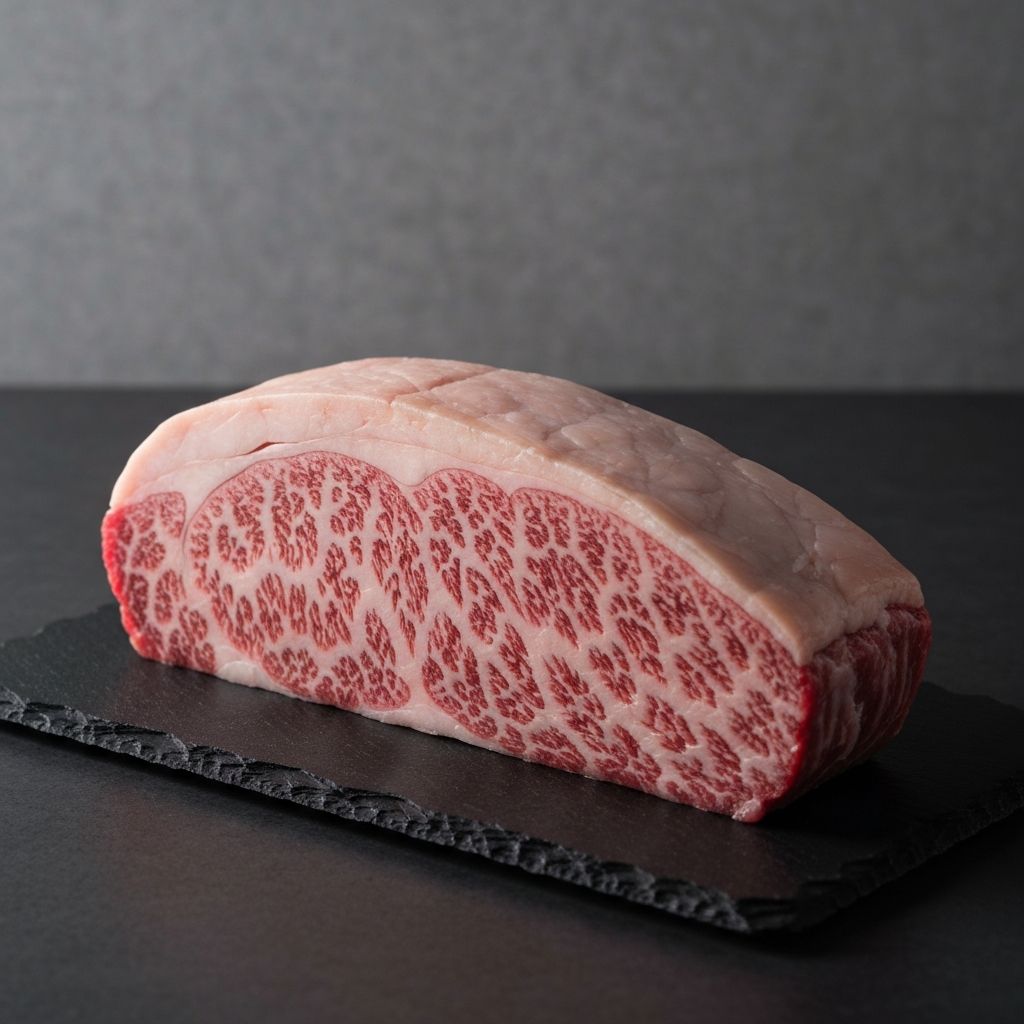
Few words in the culinary world stir emotion like Kobe. It's whispered in Michelin kitchens, written on menus like a signature of perfection.
Yet behind that five-letter word lies centuries of devotion, precision, and the kind of care that transforms food into art.
The Birthplace of Purity
Kobe beef originates in Hyōgo Prefecture, the quiet coastal region surrounding the port city of Kobe — a gateway between Japan and the world since the Meiji era.
The region's cattle, the Tajima strain of Kuroge Washu, have been raised here for over 200 years. Their bloodline is meticulously protected — no crossbreeding, no shortcuts, no compromise.
When the Meiji government opened Japan's ports in the late 1800s, foreign traders tasted Tajima beef for the first time. The marbling, tenderness, and delicate umami shocked the Western palate — and the legend of Kobe beef began.
Reference: Kobe Beef Marketing & Distribution Promotion Association
What Makes Kobe So Rare
Not every Tajima cow becomes Kobe. Only those that meet strict conditions earn the coveted Kobe Beef Certification Seal — one of the world's most exacting food standards.
Requirements include: Born, raised, and processed in Hyōgo Prefecture; Purebred Tajima-gyu lineage; Meat graded A4 or A5 by the Japan Meat Grading Association; BMS (Beef Marbling Score) 6 or higher; Carcass weight not exceeding 499 kg; Must pass inspection by the Kobe Beef Association, which assigns a unique 10-digit ID for full traceability.
Less than 0.2% of Japan's total beef qualifies as Kobe each year. This scarcity isn't marketing — it's mathematics of mastery.
Reference: Japan Meat Grading Association
Flavor, Texture & Aroma — The Symphony of Umami
Kobe beef melts at 25°C (77°F) — nearly at body temperature — due to its high oleic acid content. That's why, when it touches the tongue, it doesn't just taste — it disappears, releasing a wave of sweet umami and aroma.
Chefs often describe Kobe as 'cotton-soft, cloud-like meat,' with no residue or greasiness. Its aroma, known in Japan as 'Wagyu kō' (和牛香), is a registered sensory characteristic — the perfume of true Wagyu.
Reference: Hyogo Prefecture Official Tourism Site
The GI Tag & Global Recognition
In 2015, Kobe beef was granted Geographical Indication (GI) status by the Japanese government, officially protecting its name and origin.
This means only beef certified by the Kobe Beef Marketing Association can legally carry the 'Kobe Beef' mark — complete with a chrysanthemum logo and serial number. In global markets, this GI protection ensures consumers know exactly what they are buying — and protects Japan's most prestigious beef from imitation.
Reference: MAFF Japan — Geographical Indications
Why It Matters for WAGYU.AE
At Wagyu Arabiya Trading LLC, we honor the same precision and purity. Our Kobe Wagyu selection represents Japan's craftsmanship — delivered with the halal integrity and cold-chain excellence that define the GCC's modern luxury market.
Because real luxury isn't about price — it's about truth. And Kobe beef is truth, refined into flavor.